

The World Aral Region Charity, Inc. is a registered 501(c)3 not-for-profit corporation under the State of New York.
Past Projects
2016-2025
Voices of the Aral Region
2025
Targets
-
Plant 100 adaptable fruit trees in the community
-
Publish 8 student articles on leading news sites in Uzbekistan
-
Lead a weeklong camp in ecological advocacy


In 2025, WARC led an ecological journalism camp for raising youth voices on experiences of climate change in the Aral Region. Through interactive lessons, guest speakers, and creative activities, participants learned the fundamentals of eco-journalism — from identifying local environmental issues to researching solutions and interviewing community members. Outdoor sessions included photography and community interviews, giving students hands-on experience in storytelling.
We held a youth conference featuring speakers from the US and UK, along with volunteers from schools in Turtkul Region of Qaraqalpaqstan. We likewise planted a "New York-Turtkul Friendship Garden" in the region of Janbasqala. Guest speakers — including local environmental advocates and media professionals — shared insights into journalism, activism, and community engagement. By the end of the program, students had produced original eco-stories which were published by Ekolog.uz .
Community Partners: Ekolog.Uz; Turtkul Hokimyat; the Youth Agency of Uzbekistan; the Ecological Party of Uzbekistan


Stories of the Aral Sea 2024
Targets
-
Install a greenhouse equipped with drip irrigation
-
Monitor reverse osmosis filter
-
Lead 4 education programs, to inspire innovative collaboration amongst youth to solve ecological challenges
In 2024, WARC's annual ecological education project returned to Janabazar village in Kegeyli, in the Karakalpakstan. The two-week project in May 2024 expanded on our previous initiatives throughout Karakalpakstan and in this community. On the technical side, our project furthered our goal of promoting sustainable ecological and agricultural practices within rural schools, focusing on efficient water use and field irrigation methods in particular. The WARC team checked on our previously installed reverse-osmosis filter and worked with local providers to install a drip-irrigation-powered greenhouse on school grounds.
Central to WARC’s mission is combining service with education and fostering genuine connections with the communities we serve. In our third visit to the Janabazar community, we presented the current edition of our annual educational program, “Voices of the Aral Region.” Our curriculum, built around interactive workshops and student-created and student-focused content, was crafted to help students find and use their voice for environmental advocacy and designed to support our engineering projects.
Community Partners: The Council of Farmers, Dehkan Farms and Owners of Household Plots of Uzbekistan, Karakalpakstan branch; UNICEF Uzbekistan, Karakalpakstan project; The Presidential School in Nukus; The Youth Affairs Agency of the Republic of Uzbekistan; The Ecological Party of Uzbekistan
Update: WARC Project Report 2024 is out! ↓


Eco-Service Schools 2023
Targets
-
Install RO filters at 4 schools to reduce the incidence of anemia
-
Lead 4 education programs, to inspire innovative collaboration amongst youth to solve ecological problems via an engineering methodology
In May 2023, WARC's annual ecological education project, "Eco-Service Schools," took place in Turtkul, Karakalpakstan. The project, which ran from May 16th to 30th, promoted sustainable ecological practices within schools, focusing on efficient water use and field irrigation methods. Our project combined both service and education: the WARC team installed two reverse-osmosis water filters at Schools 39 and 47 in the village of Janbaskala. Then it engaged students in a dynamic educational program that covered a wide range of environmental topics.
Our core curriculum consisted of four components: engineering, group model building, environmental advocacy, and theater. Building on the knowledge they gained during our seminars, students engaged in real-world exercises: they built drip irrigation systems on the school grounds, performed a play inspired by local oral histories, and conducted a mock trial to resolve ecological issues such as those faced by their community, among other activities
Community Partners: the Uzbekistan Ecological Party, The Youth Affairs Agency of the Republic of Uzbekistan, Tashkent Institute of Irrigation and Agricultural Mechanization Engineers, The Bek School, Leader School, Smart School, and New Tone School, UN Joint Programme for the Aral Sea
Update: WARC Project Report 2023 is out! ↓


Engineering through Education
2022
Targets
-
Install RO filters at 2 schools to reduce the incidence of anemia
-
Implement 6 small-scale engineering projects for climate change in Qaraqalpaqstan
-
Create 2 test drip-irrigation plots
-
Lead 3 educational seminars
In March and April, we led a regional engineering camp in Kegeyli, Karakalpakstan. The program worked primarily with students from Schools 12 and 41 and addressed the environmental challenges facing the region, including saline drinking water, desertification, and difficult farming conditions. Our program centered on a hands-on environmental engineering curriculum in which students learned about water properties, environmental monitoring, and design thinking. Applying these skills in practice, students created small-scale engineering solutions for their community. They built drip irrigation systems, constructed compost stations, developed evaporative cooling systems, and assembled experimental water filters.
The project combined practical service with education: WARC volunteers installed reverse-osmosis water filters and planted native fruit trees while teaching students the fundamentals of environmental engineering. The project concluded with a community Science Fair where students presented their prototypes and demonstrated their solutions to teachers, families, and local officials.
Community Partners: Uzbekistan Ecological Party, local schools in Kegeyli, Muynoq, and Qonliqo’l, volunteer engineers from Uzbekistan and the United States.
Update: WARC Project Report 2022 is out! ↓


Spirit of Water
2021
Targets
-
Feature 5 young composers' music about local water bodies in Uzbekistan, Russia, Serbia and the United States
In 2021, WARC commissioned an international orchestral collaboration titled “Spirit of Water”. The piece is inspired by the indigenous traditions and ecological challenges facing five major water bodies in Eurasia and North America: the Hudson, the Drina, Lake Baikal, Lake Ruskeala, and the Aral Sea. The composers, hailing from Russia, Serbia, Uzbekistan and the United States collaborated to raise awareness about the natural and cultural heritage surrounding these sites. Each piece contributes to the global dialogue on climate change.
Community Partners: Opera NYC, Gorchakov Foundation

Clean Games
2020
Results:
• Bring together 470 participants to remove litter at target sites in 24 cities
• Reach over 32,000 online viewers who engaged with the events virtually
• Promote intercultural dialogue between participants in the US and Russia through bilingual online trainings
On October 10th, 2020, teams of volunteers from 24 different cities in the US and Russia participated in the The Clean Games, a team competition aimed at cleaning up natural areas and promoting sustainable practices. Our project aimed to motivate young people to advocate for a cleaner environment in their communities, by unifying and exchanging experience with their counterparts in Russia and the US. We provided a virtual platform for organizers and participants to work together in real time to remove trash and beautify their community. This need became particularly acute in the context of the Covid-19 pandemic. At a time when young people are isolated and cooped up at home, our project was useful for motivating them to explore new opportunities in global ecological activism.
Beyond simply providing the resources and protocol for executing socially distanced Clean Games, this project aimed
to encourage dialogue on innovative ideas for ecological advocacy among organizers. It is for this reason we developed the eco-forum, a 3-hour bilingual meeting with a trainer where organizers engaged in dialogue on opportunities for ecological advocacy between Russia and the US.
Community Partners: Eurasia Foundation; the US-Russia Social Expertise Exchange Program.


Investing in Sustainable Water
2018
The effects of water depletion in the Aral Basin are very visible. When we visited, school children in rural Khorezm only had access to highly saline groundwater. Local irrigation methods are often counterproductive towards water sustainability. Although there are simple solutions to these problems, communities simply cannot afford them.
We worked with local schools and farmers to install drip line irrigation and reverse osmosis systems, the two most effective methods to save and cleanse water. Drip-line irrigation facilitates long-term water efficiency on farms, therefore helping reduce the continual water depletion that led to the crisis. Reverse osmosis (RO) filters at schools remove salt from salinized groundwater, preventing anemia among rural children.
The effects of water depletion in the Aral Basin are very visible. School children in [Bogot/Bog'ot] only have access to highly saline groundwater. Many of their hands are bloated and discolored, a sign of anemia. Local irrigation methods are often counterproductive towards water sustainability. Although there are simple solutions to these problems, communities simply cannot afford them.
We worked with local schools and farmers to install drip line irrigation and reverse osmosis systems, the two most effective methods to save and cleanse water. Drip-line irrigation facilitates long-term water efficiency on farms, therefore helping reduce the continual water depletion that led to the crisis. Reverse osmosis (RO) filters at schools remove salt from salinized groundwater, preventing anemia among rural children.
Community Partners: Coca-Cola Foundation; Columbia University; Eco-Movement of Uzbekistan, Khorezm Schools #5, 7, 33, and 38; Marsel Bek, Patiort Galla and Rahimbergan Farms, OOO Debyut
Results:
-
3 drip line systems and training in Bogot and Urgench, Khorezm
-
3 reverse osmosis filters in Bogot, Shovot and Yangiarik, Khorezm
-
4 awareness programs



Buyrachi and Muynak
2018
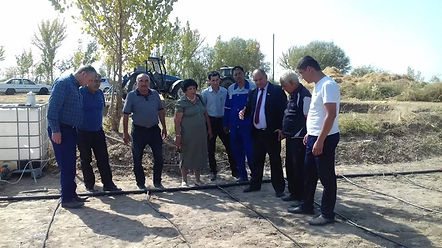
In March 2018, we traveled to Buyrachi and Moynaq, Uzbekistan to plant fruit and poplar trees which would help detoxify soil and provide a sustainable source of nutrition for local inhabitants, many of whom suffer of anemia. In partnership with the Ecological Movement of Uzbekistan, Buyrachi School #38 and Xokimyat of Moynaq, we planted 2,200 various fruit trees and poplar trees, including apple, apricot, plum, and cherry. We also planted poplar trees, which metabolize harmful toxins, revitalize the local ecosystem and stabilize soil.
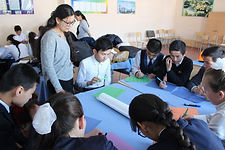
We also led an educational program on environmental activism for 40 local high-schoolers . Via sessions on environmental advocacy and project management, we helped students develop their own project proposals.
This project was funded by individual donors from our Adopt A Tree Program and Columbia University.
Community Partners: Aral Eko Tur, Eco-Movement of Uzbekistan, the Youth Union of Uzbekistan, Moynaq Xokimyat, Khorezm Forestry, Buyrachi #38
STATISTICS
-
1000 apple, pear, apricot, cherry trees planted in Buyrachi School #38
-
150 apple/pear trees, 60 meters of grapes, and 40 bushes of roses planted at Urgench School #2
-
1050 apple, pear, apricot and cherry trees distributed to needy families, nursery, children's camp, and forestry in Muynak
-
2 industrial water pumps donated to Urgench School #2 and Muynak Hospital to allow for year-round irrigation
-
School materials for 270 students distributed to 4 schools in Khorezm and Karakalpakstan
-
Children's art and poetry competition on theme of "Rebirth for the Aral" in Buyrachi School #38

Results:
• 2,200 fruit and poplar trees planted
• School children identified needs for future projects
• Educational program organized


Muynak Summit
2018
Results:
• Proposal for joint cooperation over tree planting and greenhouse construction with the Muynak Hokimyat
Following the completion of Project Buyrachi Revival, WARC organized a 2-day summit for partnering government agencies and NGOs in Muynak. Muynak is a 4 hours drive from Khorezm, and most participating leaders never have never had a chance to visit and collaborate with the municipality, which has been the most hard hit by the Aral Crisis.
Participants met with the Hokim (Mayor) and local NGOs in order to discuss common methods for restoring the pre-Aral ecology and potential avenues for partnership.
Participating organizations: NGO Nur Va Xayot, the Ecological Movement of Uzbekistan, the State Committee for Protection of the Environment, Buyrachi School #38, the Muynak Forestry, the Khorezm Ministry for Education, the Muynak Hokimyat, Muynak School #3

Urgench Soup Kitchen
2017
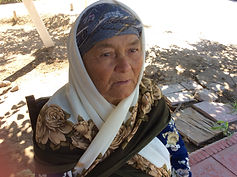
In August 2017, as our first project, we organized a soup kitchen for the elderly in Urgench, Uzbekistan. Working with a local community home, we funded the preparation of meals for local senior citizens in need.
An area affected by poor crop growth, Khorezm's local communities are affected by widespread malnutrition, especially among the elderly.
Results:
• 40 pensioners served

Warm Clothes Drive
2017
The desiccation of the Aral Sea has resulted in a major climactic shift in Western Uzbekistan. Summers are extremely hot and winters, extremely cold. In December, 2016, we organized a warm clothes drive for children and families in Muynak afflicted by illnesses. The overwhelming support we received in Philadelphia helped anemic children gain access to quality clothes for the winter.
On our March 2018 trip, we will be bringing the remainder of the clothes gathered to families in need in Buyrachi.

Results:
• 10 families and 1 school supplied with warm winter clothes
Moynaq: Children's Vitamins
2016
Targets
-
Provide 250 vitamin packages
In August 2017, we donated vitamin packages to the local children's clinic. Lacking the economic resources to care for their medical and nutritional well-being, the inhabitants of Moynaq have faced malnutrition, respiratory diseases, and cancer. Women and children are facing the worst of these illnesses, including a widespread epidemic of anemia, a disease often caused by the lack of vitamins.
On each trip to Moynaq, we bring 50 packages of children's vitamins to help relieve this urgent health crisis. The vitamins help prevent children from developing chronic nutrient deficiency diseases during early development. This project is a low-cost initiative which has a direct impact on the local community.
Community Partners: Muynak Children's Clinic
